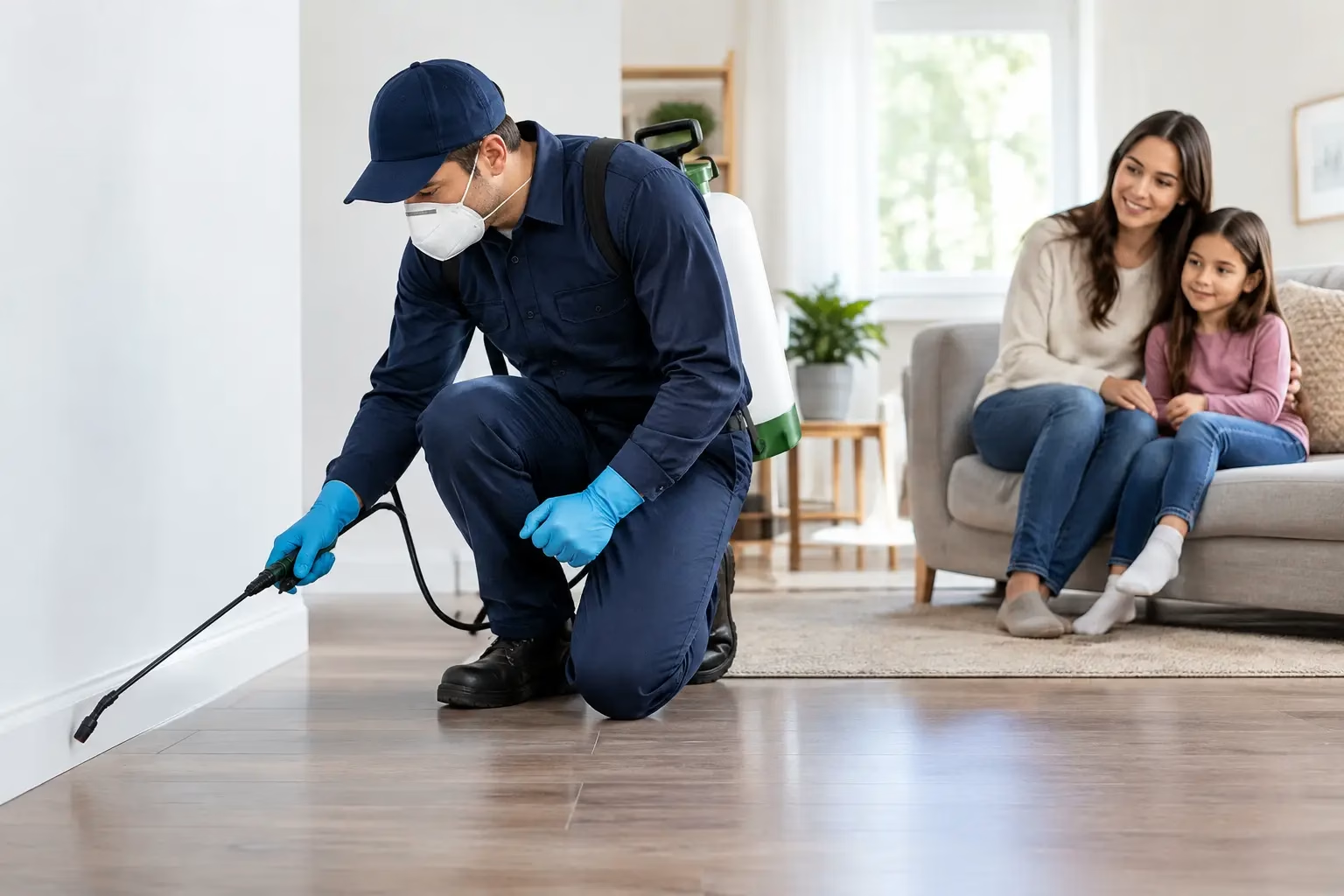
A technician treating a kitchen, nursery, restaurant, or apartment building has one job beyond removing pests: protect the people and property in that space. So, is professional pest control safe? When it is performed by trained, licensed professionals who identify the pest, select an appropriate treatment, and provide clear preparation instructions, it is designed to manage pest activity with controlled, targeted risk.
That does not mean every treatment is identical or that precautions are optional. The right plan depends on the pest, the affected areas, the products used, the condition of the property, and who occupies it. A responsible pest-control provider explains those details before treatment begins, not after.
What Makes Professional Pest Control Safe?
Professional pest control is not simply stronger product applied in greater amounts. Effective service starts with inspection and identification. Ants, cockroaches, bed bugs, termites, rodents, mosquitoes, and wildlife create different risks and require different methods. Treating the wrong pest with the wrong approach can waste time, increase exposure, and allow the infestation to continue.
A trained technician evaluates where pests are active, how they are entering, what is attracting them, and whether non-chemical or lower-exposure measures can be part of the solution. That may include sealing entry points, removing harborage areas, using traps, placing tamper-resistant bait stations, improving sanitation, or applying treatment only to specific cracks, voids, or exterior zones.
This targeted approach matters. Broad, unnecessary spraying is not the standard of quality pest management. The goal is control at the source, using the least disruptive method that will effectively resolve the problem.
Licensed professionals also follow product-label directions. Labels specify where a product may be used, how it must be applied, required protective equipment, reentry instructions, and restrictions around food, children, pets, and water sources. Those directions are part of the product’s legal and safe use requirements.
Is Professional Pest Control Safe for Children and Pets?
In most cases, professional treatment can be performed safely around children and pets when the treatment plan and instructions are followed. The key is preparation and communication. Tell the technician about babies, children who crawl or play on floors, pets, aquariums, birds, elderly residents, people with respiratory sensitivities, and anyone with a relevant medical concern.
A qualified provider can account for those details when planning service. For example, gel baits may be placed in inaccessible cracks and crevices rather than in open areas. Rodent bait may be secured inside tamper-resistant stations. A flea treatment may require pets and people to remain out of treated rooms until surfaces are dry. An exterior mosquito application may require moving pet bowls, covering certain items, or keeping people away from the treatment area for a stated period.
Never assume that a product is harmless because it is common, or that a treatment is dangerous because it is professional. Risk depends on exposure. Used as directed, a properly chosen treatment limits opportunities for unintended contact. Ignoring technician instructions can change that equation.
Aquariums deserve special attention. Fish and aquatic organisms can be particularly sensitive to certain pest-control products. Inform your technician before service so appropriate steps can be taken, such as covering the aquarium and temporarily turning off air pumps when instructed. Birds, reptiles, and exotic pets may also require specific precautions.
Why DIY Treatments Can Create More Risk
Store-bought pest products have a place for small, isolated problems, but repeated DIY applications can create avoidable safety and control issues. Homeowners may use multiple products at once, apply too much, treat areas that are not contributing to the infestation, or select a product that does not work for the pest involved.
Cockroach control is a familiar example. Foggers and broad sprays may kill a few visible roaches while leaving hidden populations, egg cases, food sources, and entry points untouched. Some products can also drive pests deeper into walls or into new areas. A professional approach focuses on species identification, harborage, targeted baiting or treatment, sanitation guidance, and follow-up when needed.
Rodents present a different challenge. Loose poison placed where children, pets, or non-target animals can reach it is not a safe control strategy. Professional rodent service should address exclusion, trapping, monitoring, and secure bait placement where bait is appropriate. Removing rodents without closing access points often leads to another infestation.
The trade-off is straightforward: a professional service may cost more upfront than a can or trap from the hardware store, but it can reduce guesswork, repeated exposure, property damage, and the disruption of a problem that keeps returning.
What to Expect Before and After Treatment
Safe service is a shared process. Before treatment, customers should receive practical preparation guidance based on the pest and treatment area. You may be asked to clear items from under sinks, store food and dishes, vacuum carpets, wash pet bedding, move furniture away from walls, or make certain rooms accessible. For commercial properties, preparation may also involve coordinating with staff, protecting inventory, and scheduling service around operations.
Do not over-prepare unless instructed. Moving infested items from room to room can spread bed bugs, fleas, or cockroaches. Cleaning away a bait placement or removing monitoring devices can interfere with treatment. If anything about the instructions is unclear, ask before the technician arrives.
After service, follow the reentry and cleaning guidance provided for your specific treatment. Some applications require no extended absence, while others require people and pets to remain out of an area until it is dry or for a stated time. Avoid washing treated cracks, crevices, or baseboards unless directed. At the same time, continue normal cleaning and sanitation in untreated areas.
A reputable company should be able to tell you what was treated, why it was treated, and what you should do next. For ongoing pest pressure, follow-up service may be necessary. That is not a sign that the first visit failed. Many pests have life cycles, hidden activity, or environmental conditions that require monitoring over time.
Safety Means Managing the Pest Problem Too
Pests are not harmless houseguests. Rodents can contaminate food and insulation, damage wiring, and introduce parasites. Cockroaches can worsen allergy and asthma symptoms for some people. Bed bugs disrupt sleep and spread quickly through apartments, hotels, and shared spaces. Stinging insects can create a serious concern for people with allergies. Termites and wood-destroying insects can silently cause expensive structural damage.
For businesses, the stakes can extend to customer confidence, sanitation standards, employee comfort, inventory protection, and compliance obligations. Ignoring an infestation because of concern about treatment may allow the underlying risk to grow.
Professional pest management weighs both sides: the potential risk of treatment and the real risk of uncontrolled pest activity. The safest decision is often a measured, documented plan that solves the problem rather than repeatedly reacting to what is visible.
Questions to Ask Your Pest-Control Provider
Before scheduling service, ask whether the company is licensed and insured, what pest it believes is present, and how it will confirm the diagnosis. Ask what treatment methods are planned, what preparation is required, whether children or pets need special accommodations, and when it is safe to return to treated areas.
You should also ask about prevention. The best service does more than remove current activity. It identifies moisture issues, gaps around utility lines, damaged screens, food sources, clutter, vegetation contact, and other conditions that make a property easier for pests to invade.
Imperial Pest approaches treatment as property protection, not a one-size-fits-all spray. A clear inspection, precise treatment, and practical prevention plan give homeowners and businesses control without leaving safety to chance.
If you are dealing with pests, disclose the details that affect your household or facility, follow the service instructions carefully, and choose a provider that takes the time to explain the plan. That is how pest control stays focused where it belongs: on protecting the people, pets, property, and reputation that matter most.