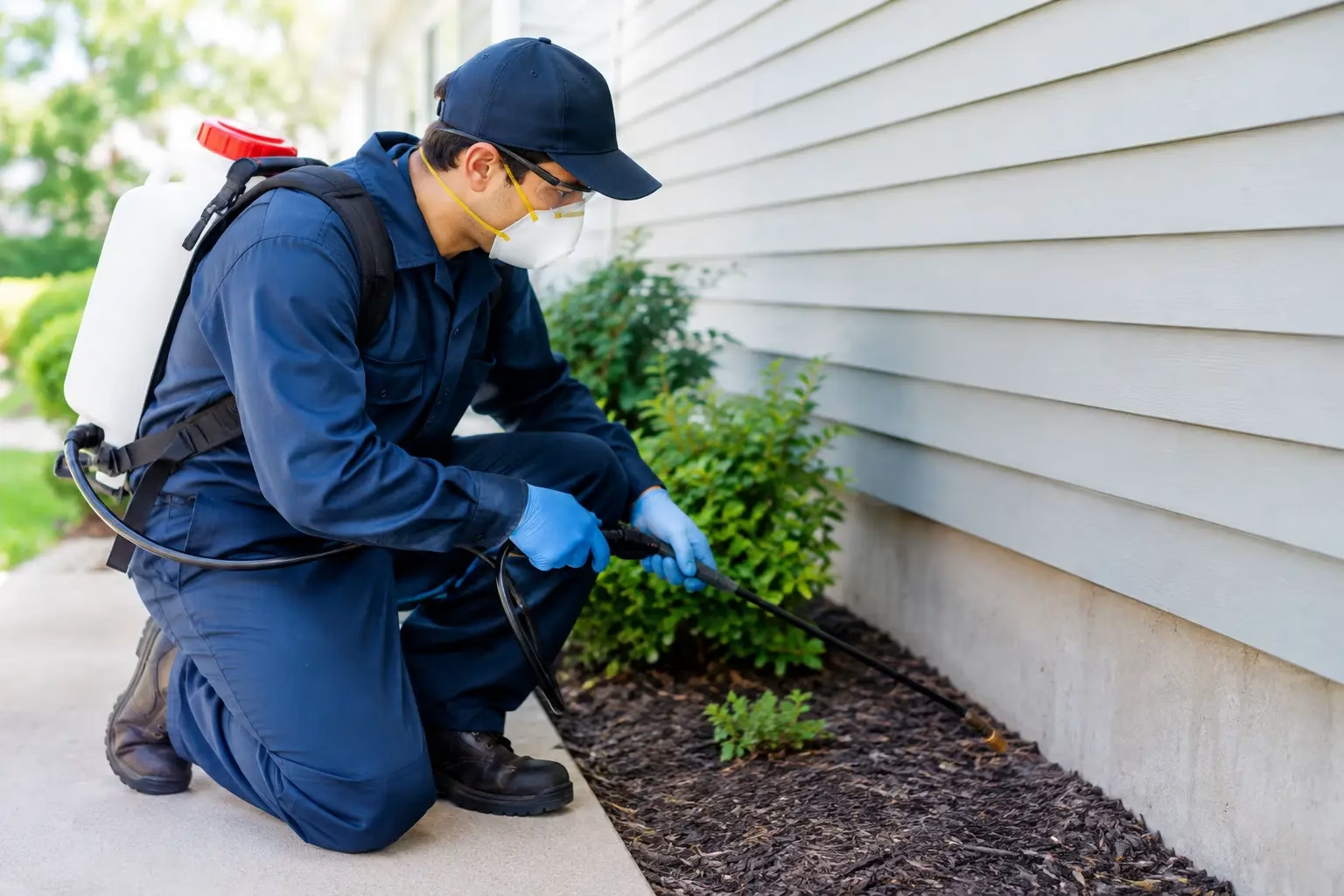
A line of ants across a kitchen counter or scratching inside a wall creates one immediate question: what do professional pest control companies use that store-bought products do not? The answer is not one stronger spray. Effective professional pest management combines accurate identification, commercial-grade tools and products, physical repairs, and follow-up monitoring designed to stop the conditions that allow pests to return.
For a homeowner, landlord, or business operator, that difference matters. A visible pest is often only part of the problem. The nest, entry point, food source, or hidden population may still be active long after a quick consumer treatment appears to work.
Professional Pest Control Starts With Inspection
Before applying a product, a qualified technician looks for evidence. That includes live insects or rodents, droppings, gnaw marks, damaged materials, rub marks, nesting sites, moisture issues, and gaps around utility lines, doors, vents, and foundations. The goal is to identify the pest correctly and understand where it is living, feeding, and moving.
This step determines the treatment plan. Ants trailing into a kitchen may require locating exterior activity and moisture sources. Rodent activity in an attic may call for exclusion work before trapping can provide lasting relief. Bed bugs, cockroaches, termites, fleas, and pantry pests each require a different approach.
Misidentification leads to wasted time and unnecessary product use. A professional uses inspection findings to treat the actual issue rather than guessing based on what was seen once.
What Do Professional Pest Control Companies Use?
Professionals use a carefully selected combination of treatment methods. The exact tools depend on the pest, the property, the severity of activity, and whether children, pets, tenants, customers, food, or sensitive equipment are present.
Targeted insecticides and baits
Professional-use insecticides can be more concentrated or available in formulations not typically sold in retail stores. More importantly, technicians are trained to select the right active ingredient and application method for a specific pest. Products may be applied as a crack-and-crevice treatment, a precise spot treatment, an exterior barrier, a dust in inaccessible voids, or a bait placed in a protected station.
Baits are especially valuable for many ants, cockroaches, and rodents because the pest carries the material back to a nesting or feeding area. That can control a hidden population instead of only killing the pests that cross an exposed surface. However, bait is not a universal answer. Competing food sources, incorrect placement, and the wrong bait type can reduce results.
Technicians also use insect growth regulators for certain insect problems. These products interrupt normal development or reproduction, helping break the life cycle of pests such as fleas and cockroaches. They are often used alongside an adult-control product, not as a replacement for cleaning, sanitation, or treatment of breeding areas.
Traps, monitors, and bait stations
For rodents, traps remain one of the most direct and accountable control methods. Professionals may use snap traps, multi-catch traps, tamper-resistant bait stations, or specialized monitoring devices depending on the setting. In a home, placement is critical because rodents travel along edges, behind appliances, and through hidden voids rather than across open rooms.
Commercial properties often benefit from documented exterior bait stations and interior monitoring points. These tools help identify activity early, guide service decisions, and support the recordkeeping many facilities need for quality assurance or regulatory expectations.
For insects, glue boards, pheromone monitors, and other detection devices help reveal where activity is concentrated and whether a treatment is working. Monitoring is not passive. It provides evidence that allows a technician to adjust the plan before an isolated issue becomes a larger infestation.
Exclusion materials and repair tools
Pesticides alone cannot solve an opening in a building. Professional pest control companies use exclusion materials such as metal mesh, door sweeps, vent covers, sealants, flashing, and hardware cloth to block common access points. They may also recommend repairs to damaged screens, weather stripping, siding, rooflines, plumbing penetrations, or foundation gaps.
Exclusion is one of the most important services for rodents and nuisance wildlife, but it also helps with insects. A gap around a pipe, torn window screen, or unsealed utility opening can provide a reliable route indoors. Sealing that access changes the long-term outcome far more than repeatedly treating the same area.
The right material matters. Foam alone may be quickly chewed by rodents. Fine mesh used for one pest may not be appropriate for another. A professional evaluates how pests are entering and chooses a durable method that preserves the property while closing the pathway.
Specialized equipment
Depending on the job, technicians may use HEPA vacuums, crack-and-crevice applicators, dusting equipment, moisture meters, thermal tools, inspection cameras, and protective equipment. For bed bugs, some situations call for targeted steam treatment or whole-room heat equipment. For termites, treatment may involve soil-applied termiticides, baiting systems, or wood treatments based on construction type and infestation evidence.
These tools are useful because they increase precision. A treatment in a wall void, beneath a slab, or around a pipe penetration should be made with control and purpose. Applying more product than necessary is not a sign of better service. Proper placement, appropriate product selection, and a sound plan are what produce results.
Why Professional Products Are Only Part of the Solution
It is understandable to assume pest control is mostly about chemicals. In reality, sanitation, moisture management, and structural conditions often determine whether pests remain a recurring issue.
Cockroaches need access to food, water, and shelter. Rodents look for warmth, nesting material, and entry points. Drain flies and some other moisture-loving pests thrive where leaks or organic buildup persist. A technician may treat the active population, but a property owner or facility team may need to correct the underlying condition for control to hold.
That is why professional recommendations can include storing food in sealed containers, improving dumpster practices, reducing clutter, repairing leaks, trimming vegetation away from the structure, and keeping doors closed or properly sealed. These are not side notes. They are part of the control strategy.
Safety Depends on Method, Placement, and Communication
Professional pest control should be effective without treating your home or business carelessly. Technicians use product labels, site conditions, pest biology, and occupant needs to determine what can be applied, where, and when. They should communicate preparation instructions, reentry guidance when needed, and practical steps that support treatment success.
Occupied spaces require particular care. A restaurant, daycare, multifamily property, medical office, or home with pets may need an approach that limits disruption while addressing the source of activity. In some cases, trapping, exclusion, sanitation improvements, and monitoring may be the main solution. In others, targeted applications are necessary to gain control quickly.
Ask your provider what pest was identified, what method is being used, what you should do before and after service, and when to expect results. Clear answers are a sign of a thoughtful plan, not a one-size-fits-all treatment.
One-Time Treatments vs. Ongoing Protection
A one-time service can be appropriate for a limited, clearly identified problem. A wasp nest, an occasional ant trail, or a single rodent entry point may be resolved with targeted treatment and repair. Yet pests that reproduce quickly, have multiple entry points, or are common in a particular area often require follow-up.
Ongoing pest control typically includes scheduled inspections, exterior prevention, monitoring, seasonal adjustments, and prompt response if activity appears between visits. This approach is especially valuable for multifamily housing and commercial facilities, where one untreated unit, loading area, break room, or trash enclosure can affect the entire property.
The best program is not necessarily the one with the most frequent treatments. It is the one that matches the property’s risks and provides evidence that pest pressure is being managed over time.
When It Is Time to Call a Professional
Repeated sightings, unexplained bites, droppings, property damage, unusual odors, insect activity around food, or noises in walls are all reasons to act promptly. Termites, bed bugs, cockroaches, rodents, and stinging insects can become more difficult and expensive to manage when treatment is delayed.
Imperial Pest approaches these problems as property protection, not a quick spray-and-leave task. A clear inspection, targeted treatment, and practical prevention plan give you a path back to a cleaner, safer, more comfortable space. When pests disrupt your home, tenants, customers, or daily operations, the right next step is a professional assessment that addresses what is visible and what is happening behind the scenes.